A Designer's Take on the Blue Colored Bright Clouds Embroidery File
When you work with embroidery designs day in and day out, you develop a kind of instant visual intuition. You see a file and immediately picture it stitched out—not just on the screen, but on fabric, on a product, in a customer's hands. So when I first opened the Blue Colored Bright Clouds embroidery design, my mind went straight to a practical scenario. I imagined I was preparing a custom order for a client: a set of matching nursery pillow covers and a cozy baby blanket. This design, with its cheerful theme, felt like a perfect candidate. Let's walk through that real project lens.
The Immediate Mood and Project Fit
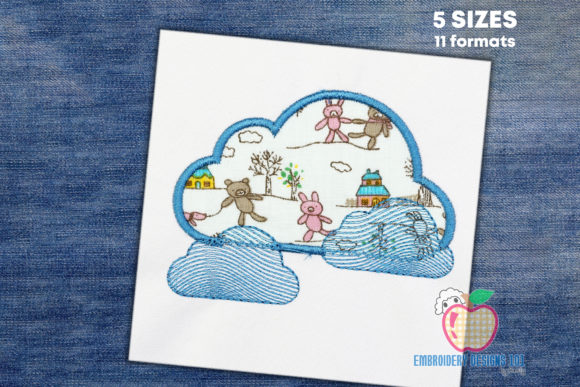
The name gives you the core idea, but the real impression is one of lighthearted, serene optimism. These aren't storm clouds; they're those bright, puffy clouds you see on a clear spring day. The layout feels open and airy, not cramped or overly detailed. This gives it a versatile personality—it's playful enough for a child's item but also carries a simple, graphic charm that would work on an adult's kitchen towel or a boutique apron. It naturally belongs to projects where you want to add a touch of friendly, sky-blue cheer without overwhelming the item.
Given its listed category of Cities, I can see the thematic link—it evokes that feeling of looking up at a bright urban skyline on a good day. For embroidery, this translates beautifully into personalized gifts or small shop merchandise that carries a positive, everyday vibe.
Where This Design Shines in Real Stitching
Thinking about my hypothetical nursery set, the Blue Colored Bright Clouds design would be a star. On a light-colored cotton pillow cover, those blue hues would pop with a clean, crisp finish. The separated color steps mentioned in the description are a crucial practical detail—they allow for efficient stitching and easy thread management, which is a boon for small business owners running multiple items.
Beyond baby items, this machine embroidery design has a wide field of play. Consider:
- Custom apparel like lightweight sweatshirts or t-shirts for a casual, handmade look.
- Tote bag designs for a craft fair product—it’s eye-catching but not too niche.
- Embroidered patches that could be applied to caps or jackets; the graphic style lends itself well to a patch format.
- Home decor such as tea towels or simple pillow covers, adding value to everyday objects.
- Holiday embroidery or wedding gifts where a generic "happy" theme is needed—it’s not seasonal but feels giftable.
For Etsy sellers and digital product sellers, this file is a solid design asset. Its clear shapes make it excellent for creating printable mockups to preview products, and its commercial embroidery potential (with proper licensing confirmation, of course) means it can be scaled across many finished products.
The Considerations: Where to Use a Careful Hand
No design is universally perfect, and a professional review means pointing out where you need to plan. The open, airy nature of this cloud design is generally good, but some areas demand attention.
First, stitch density and small details. Without knowing the exact count, I always advise testing on scrap fabric first. Check if any small, intricate corners within the cloud shapes might become too dense on thin or stretchy fabric, like a t-shirt. A proper stabilizer is non-negotiable here.
Second, fabric texture and color. While the blue colors are described as bright, contrast is key. On a dark fabric background, you'd need to carefully review thread color choices—maybe a brighter blue or even a white outline to maintain clarity. The design’s visual appeal hinges on that cheerful contrast.
Third, application on curved surfaces like caps. The layout seems forgiving, but you must confirm the hoop size compatibility for smaller areas to ensure the design doesn’t get distorted. Also, for products that need frequent washing, like baby clothes or kitchen towels, ensuring the stitch areas are secure and not overly dense will aid longevity and maintain customer trust in your handmade product.
How It Impacts Your Product and Business
Using a design like this isn't just about making a stitch; it's about crafting an entire product experience. From a business owner's perspective, Blue Colored Bright Clouds elevates the handmade presentation. It feels professionally executed yet retains a friendly, accessible charm—that balance is gold for brand consistency, whether you're a hobbyist making gifts or a creative entrepreneur building a line.
The design’s clarity after stitching directly affects buyer engagement. A clean, well-defined embroidered cloud on a tote bag or sweatshirt looks intentional and high-value, not messy or amateur. That builds recognition and professionalism for your craft business. For personalized gifts, it’s a safe bet—it’s broadly likable and unlikely to offend or miss the mark.
Practical Designer Notes Before You Hoop
Before you run this file for a client project or your next Etsy listing, here’s my checklist from the worktable:
- Always test the design on scrap fabric first, matching the final project’s material.
- Review the provided embroidery file formats to confirm compatibility with your machine.
- Check thread color contrast against your final fabric—test it in black and white mockups to gauge value contrast.
- Inspect the small details in the stitched sample; look for any potential jump stitches or awkward fill stitch areas.
- Compare how it looks on both light and dark fabric backgrounds if you plan to use it across different products.
- Use the proper stabilizer for your chosen fabric texture to preserve that bright, clean look.
- Crucially, confirm the licensing terms before selling finished items or digital products derived from the design.
In essence, the Blue Colored Bright Clouds embroidery design is a versatile, mood-lifting file. It’s not the most complex design you’ll own, but in the world of real embroidery projects, that’s often its strength. It gets from the screen to the fabric with a clear, cheerful result that can adapt to a wide range of personal and commercial projects. As a designer, I appreciate that kind of practical, reliable utility. It lets you focus on creating a great finished product, which is, after all, the entire point.